How to Clean With ADHD
The standard cleaning advice — make a list, work top to bottom, batch your chores — quietly assumes a brain that can hold a plan in working memory, start on command, and stop on a schedule. If that is not the brain you have, the failure was never about effort. This is the method rebuilt from the ADHD side.
Step one: shrink the first decision
Task initiation, not scrubbing, is where ADHD cleaning dies. So the method starts smaller than feels reasonable: not "clean the kitchen" but "clear the sink"; not "tidy the bedroom" but "make the bed". The planner on the homepage is built entirely from steps of this size, because a step you cannot argue with is the only step guaranteed to happen.
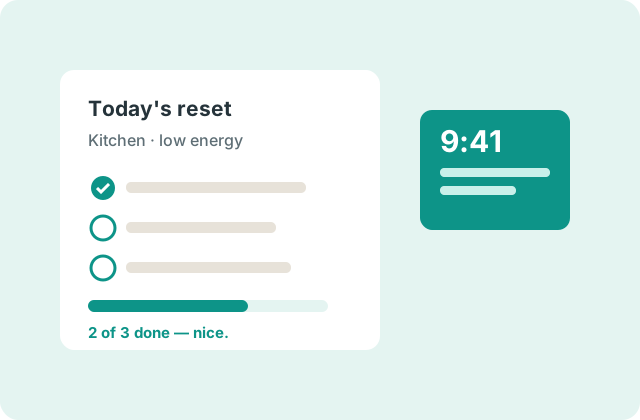
If even the first step is not happening, the problem is not the step size — it is the fuel. That is what the energy selector is for: picking low energy is not lowering your standards, it is reporting data. The planner responds by generating a genuinely smaller plan, not the same plan with smaller fonts.
Step two: pick the energy honestly, plan the minutes
An honest "I have nothing today" produces a three-step plan that keeps the house functional and the habit alive. A fantasy "I should be able to do a deep clean" produces a half-finished kitchen and a shame spiral that costs you Thursday too. The energy pick is the highest-leverage tap on the whole site — treat it like a weather report, not a confession.
The minutes cap works the same way: a plan for the 10 minutes you actually have beats a plan for the 45 minutes you wish you had. When the window ends, the plan ends. Anything extra is a bonus round, never the expectation.
Step three: time the edges and make stopping safe
Start the timer before the first step. The timer does the deciding, which is the exact job ADHD brains are worst at — you are not choosing when to stop, you are just obeying the beep. And when it rings, stopping must be genuinely allowed: a method where stopping equals failing is a method that gets abandoned the first hard week.
This is also why progress is visible and saved. ADHD memory rewrites "I did something" into "I did nothing" with alarming speed — the progress bar, the checkmarks, and a before photo are the receipts. Evidence beats motivation because it does not depend on mood.
What this looks like on a real day
Low-energy Tuesday: kitchen plan, low mode, 10 minutes. Sink, counters, trash out. Timer rings, you stop, the house is functionally fine, and the habit survives to Wednesday. High-energy Saturday: same planner, whole-home plan, 30 minutes, momentum riding optional. Both days count. The schedule page assembles these days into a week, and the dopamine menu handles the why-would-my-brain-agree problem.
What if I cannot even start the smallest plan?
Then today is a rest day, not a character verdict. Executive function has weather. The habit is protected by the days you do run, and one skipped day does not touch the streak that matters — which is "the kind of person whose house resets", not "the kind of person who never rests".
Do I need a diagnosis for this to be useful?
No. The planner helps anyone whose cleaning stalls on starting, deciding or finishing — diagnosis optional, dishes available.
How is this different from just using a timer app?
A timer is one piece. This is the whole loop: plans sized to energy, steps small enough to start, visible progress, a saved plan after interruptions, and a print mode for paper brains.